Let us plan on attending!...
Tuesday, May 31, 2011


Sunday, May 22, 2011
From the Daily Report
CHURCH BATTLES OVER PROPERTY
A split Savannah congregation has high court weighing which side should own historic site
By Alyson M. Palmer, Staff Reporter
Thorny theological differences that have divided a historic Savannah church gave way to secular legal arguments before the Georgia Supreme Court on Monday as the justices weighed which side of the split should control property that has been in the church's name since 1733.
The dispute, which has drawn competing amicus briefs from a spectrum of Christian denominations, stems from a decision by the majority of Savannah's Christ Church to leave the national Episcopal Church in 2007.
The departure followed similar moves in other Episcopal congregations since 2003, when the national church made a gay man a bishop.
In Savannah, Christ Church's reverend, also known as the rector, informed the bishop in charge of Episcopal churches in Georgia that the breakaway church had placed itself under the authority of the more conservative Anglican Province of Uganda. Rector Marc Robertson has said in press releases the dispute is about the "freedom to choose to follow the Jesus of Holy Scripture and not a culturally-manufactured Jesus."
The national Episcopal Church released the rector from his duties and appointed a new priest to minister to the remaining congregants who had elected to remain loyal Episcopalians. And the national church would not let go of the considerable earthly possessions amassed by the parish over the past 278 years.
Along with the Georgia diocese and the Christ Church members who stayed, the national church filed suit. They asserted ownership over the land on which Christ Church parishioners have worshipped for centuries, as well as the congregation's endowment and other real estate. The national church argues that the local congregation has held title to the property in trust for the mission of the greater church.
The breakaway church members, who have been allowed to remain in the historic church building during the course of the litigation while the minority members of Christ Church have been meeting in borrowed church space elsewhere in Savannah, argue that they could not have been holding the property in trust for the larger church because Christ Church predates the existence of a national Episcopal church.
Christ Church, whose early leaders included colonial religious figures John Wesley and George Whitefield, was granted the land on which the church building now sits by the English king and didn't become affiliated with the national Episcopal Church until 1823.
But the breakaway congregation has lost its legal fight, both before Judge Michael L. Karpf of the Chatham County Superior Court and a panel of the state Court of Appeals. The state Supreme Court in January agreed to take a look at the case, over the dissents of Justices Robert Benham and Hugh P. Thompson.
Besides garnering national media attention, the case has drawn numerous amicus briefs, signaling that the importance of the case goes beyond resolving a local congregation's squabble. The Becket Fund for Religious Liberty, the Presbyterian Lay Committee and the American Anglican Council have filed briefs backing the breakaway church. The African Methodist Episcopal Church, the Greek Orthodox Church, the United Methodist Church and the Church of God have filed briefs supportive of the national Episcopal Church.
Courts have been cleared to handle church property disputes since a landmark 1979 decision by the U.S. Supreme Court. In that case, which was from Georgia, the nation's highest court said the First Amendment does not bar secular courts from resolving church property disputes, as long as the courts apply "neutral principles of law."
The Georgia Supreme Court has signed off on disciplinary rules of the Holiness Baptist Association and the United Methodist Church that imposed trusts on local church property for the benefit of the greater denomination.
The bench was fairly quiet at Monday's argument. Most of the court's remarks and questions came from Justice David E. Nahmias, who seemed more receptive to the arguments of the national church, and Bibb County Superior Court Judge S. Phillip Brown, who sounded inclined to vote in favor of the breakaway congregation. Brown was sitting in for Presiding Justice George H. Carley, who recused from the case for reasons not announced by the court. (Carley's official court biography says he is a member of St. Barnabas Anglican Church in Dunwoody.)
Appearing for the breakaway church, Savannah lawyer Paul W. Painter Jr. argued that the state Court of Appeals had applied too broadly a state statute, O.C.G.A. § 14-5-46. The law says that "[a]ll deeds of conveyance" for "any lots of land" for the purposes of building a church or meeting house shall be valid for the purposes contained in the deeds.
Painter said the statute was merely a "deed validation statute," one that "does not cover what the Court of Appeals was recognizing."
"It does not cover any and all property a church may hold," he added.
Brown, the visiting judge from Macon, said the meaning of the statute was clear: Church property must be used for the purposes set forth in a deed, not a church canon promulgated in New York (an apparent reference to the site of the Episcopal Church's headquarters).
"I'm just wondering why you're fighting this statute," he told Painter.
"Your honor's points are excellent points," Painter responded, explaining the statute was simply the only way the national church could win the case.
The national church also has relied on a 1979 church canon, known as the Dennis Canon, that purports to place parish property in trust for the national church and local diocese. Painter argued Monday that, if such a stipulation is not in a deed, it must be in the denomination's constitution or the next closest thing.
But Nahmias questioned that argument, noting that at various points in Christ Church's history it had formally acceded to not only the larger church's constitution, but also its canons. "Why do we say constitutions matter and canons don't, when you accede to both?" asked Nahmias, whose campaign biography says he's a member of Holy Innocents' Episcopal Church in Atlanta.
Episcopal Church rules require giving congregations three years to consider a constitutional change, Painter replied, while the record is clear that neither individual churches or dioceses were given advance notice that the Dennis Canon would be on the 1979 meeting's agenda.
Nahmias questioned how a secular court could require certain church procedures without violating the rule that it must apply neutral legal principles.
Brown helped Painter out on that one. "Bylaws come and go with board meetings," said Brown. "Constitutions have more stability to them."
Appearing for the national church, Valdosta attorney James L. Elliott argued that O.C.G.A. § 14-5-46 was meant to apply to any written document conveying property and did not apply to worship space alone. Elliott insisted that the court could look at church documents to back up the national church's stance, if the statute doesn't apply.
Nahmias asked Elliott why his side was trying to "squeeze" this case into the statute.
When Elliott responded that the interpretation of the statute was the question posed by the court in agreeing to hear the case, Nahmias turned to his colleagues on the bench, grinned and shrugged, garnering laughter from the galley.
Elliott presented the national church's argument along with Mary E. Kostel, a Washington-based in-house lawyer for the Episcopal Church. She noted that the dispute was not simply a local-versus-national-church dispute, arguing that the Christ Church members who have elected to stay as Episcopalians deserve access to their property.
Kostel argued that, when Christ Church joined the Georgia diocese in 1823, Christ Church relinquished its separate congregational identity.
When Brown noted that the Dennis Canon didn't exist then, Kostel said that the tradition of the local church holding property in trust for the larger church, while codified by the church over time, dates back to the Church of England.
"The building stays within the larger church," she said.
The case is Rector, Wardens and Vestrymen of Christ Church in Savannah v. Bishop in the Episcopal Diocese of Georgia, No. S10G1909.
Tuesday, May 17, 2011
The Decalogue, or Ten Commandments
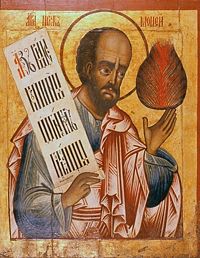
Why does the Anglican Rite include the Decalogue, or Ten Commandments, at the beginning of the Eucharistic Liturgy?
A brief history: In 1552, the Ten Commandments were introduced in a litany form with the expanded Kyrie response, which text replaced the ancient ninefold Kyrie eleison of the Latin Rite. Archbishop Thomas Cranmer sought by doing so, practically, to settle objections from some reformers that the 1549 First English Prayer Book Mass too closely resembled the old Roman Rite Mass. He rearranged the Eucharistic liturgy and introduced a corporate preparatory penitential act of examination of conscience at the very beginning of the liturgy (not unlike the 1970 Roman Novus Ordo Missae). He retained the Kyrie as being penitential in character, as he also desired to include in the Mass those three things which Christians 'ought to know and believe to their souls' health': the Ten Commandments, the Creed and the Lord's Prayer. The use of the Decalogue at the beginning of the Eucharistic liturgy began with some of the early Lutheran liturgies on the continent. Archbishop Cranmer, in this, as in so many other instances, simply borrowed this practice from the Lutherans. The tropes found in our liturgy, 'incline our hearts to keep this law' and 'write all these thy laws in our hearts, we beseech thee' were based on medieval custom and tradition, in which additional petitions were frequently added to the Kyrie eleison for different feasts and occasions: the ancient Sarum Use in England was filled with such liturgical embellishments. And so the precedent was set for the Anglican liturgy from henceforth.
Theological purpose: The Commandments are included to confront us immediately with the fundamental truth that God demands our entire obedience to His holy and righteous will, in love, adoration, and service of Him for His own sake as Lord of all, and in love of our neighbour for the love of God. Submission to the Law of God, in Christ by the Holy Ghost, is the necessary condition for the fulfilment of our true selves as children of God made in His Image and Likeness. Our continual breaking of the Law severs that communion with God and our neighbour for which we were created, redeemed and sanctified. We beg God to enter us, therefore, into that one and only obedience and sacrifice by which we alone are enabled truly and rightly to keep the Commandments, the perfect filial love and obedience of Jesus Christ, whose perfect love of the Father is the fulfilment and completion of the Law. We plead the merits and sacrifice of Our Lord, through whom we now can and must obey God's holy will. No communion with God or our neighbour is possible until we are prepared and ready to accept God's demand placed upon us and to acknowledge and confess our sin, to ask for God's mercy and to beg His grace to incline our hearts to keep His Commandments.
The rite of the Holy Eucharist is a rehearsal for judgement day, and a vivid presentation of the entire history of salvation: the Mass recaptures for us and liturgically expresses the drama and economy of redemption. In the beginning, Original Sin occurred when man disobeyed God by transgressing His will; so too now, we are personally and corporately guilty of disobeying God and transgressing His Commandments - and therefore we acknowledge at the beginning of the Liturgy that we have all sinned and fallen short of the glory of God, pleading for God's mercy and forgiveness, and for His grace to live holier and better lives. We have been given the Law of God, and we have not kept it - our confession of this fact at the beginning of the Mass places us in the right spiritual disposition to worship the Blessed Trinity and to receive the gift of the Blessed Sacrament, the true Body and Blood of Christ, for the forgiveness of sins and eternal life. At the outset, we admit our sins and failings, recognising with Saint Paul that the Law of God is a 'schoolmaster that brings us to Christ so that we may be justified by faith' (Galatians 3.24). The Law shows us that we are all sinners in need of a Saviour and Redeemer. The Law cannot of itself save - its purpose is to reveal to us our sinful nature and demonstrate that we must receive remission of sins from Jesus Christ as grace and gift. Only through Christ's Atonement and only by our incorporation into Christ's Body can we love and obey God in Christ by the power of His Spirit. The Ten Commandments instantly point us to Christ - and thus we say 'Lord, have mercy upon us.' The whole Liturgy of the Eucharist sacramentally applies the Person and Work of Jesus Christ to us.
The human race fell into sin, was judged worthy of death, was sent the Law and the Prophets to call us back to God (Collect for Purity, Ten Commandments, Summary of the Law, Kyrie eleison) , was readied and prepared for the coming of the Messiah (Collect, Epistle), and in the fullness of time was redeemed by Jesus Christ, the Incarnate Lord, true God and true Man, who freely offered Himself for our salvation through His atoning death on the Cross and His Resurrection and Glorification (Gospel, Creed, Prayer of Consecration, Agnus Dei, Thanksgiving), and who now freely gives Himself for salvation in the Blessed Sacrament (Holy Communion) to those who truly repent and believe the Gospel (Confession, Absolution, Comfortable Words). By reliving and re-experiencing this Mystery day in and day out under a veil, in a Sacrament, we prepare for our death and the judgement, wherein we shall plead the mercy of Jesus Christ at the Last Day and inherit the promise of the heavenly Kingdom. And all of this is contained in the traditional Anglican Holy Communion service!
Missal Moment III
Courtesy once again of my sacerdotal and biological brother, Father Brandon Jones, and the RC Diocese of Charlotte, North Carolina: this video discusses the Ecce Agnus Dei, the traditional form of which is also found in the Anglican Rite. Another restoration back to the Anglican translation!
Saturday, May 14, 2011
The 21st May 'Rapture' from the Atlanta Journal-Constitution
That’s when, according to some predictions, Jesus will return.
Last year, WeCanKnow .com, a Christian-based website in North Carolina, selected metro Atlanta as the site for dozens of billboards proclaiming Christ’s imminent return and the Rapture of Christian believers. In Nashville, similar billboards were paid for by Harold Camping, a Christian author and radio broadcaster in California, who is pushing the idea that May 21 is the date. He mistakenly predicted the same series of events in 1994. He bases that date on an analysis of Scripture.
With so many people skeptical about the date for various reasons, what’s behind the choice of May 21?
Tom Evans, media representative for Family Stations Inc., of which Camping is president and general manager, said, “All the signs that Jesus warned of in the Bible that would precede his return have taken place, and are evident in our world. For example, the re-establishment of the nation of Israel; the complete decay of the church; the dismal state of our world; and the moral breakdown of all of society.”
The belief holds that not only will the Rapture occur next Saturday, but the end of the world will occur on Oct. 21.
Bishop Chandler Jones, however, won’t be holding his breath. Instead, the rector at St. Barnabas Anglican Church in Dunwoody will be performing a wedding May 21 “that will go on exactly as planned.”
“I think it’s very presumptuous to try to predict the time and hour of Jesus’ return because our Lord says in the Gospel that even the Son does not know the hour of his return,” he said.
Jones said he thinks some people may buy into that theory, though, because of the recent number of natural disasters around the world, including earthquakes, tsunamis and floods, and the “anxiety of our times,” including the economy, politics and society....
Friday, May 13, 2011
Our Wedding Anniversary - 13th May 2000
Today, eleven years ago, Megan and I were married on the
Feast of Our Lady of the Blessed Sacrament. The Lord has blessed us wonderfully!
+++
The Prayer Book's service for Holy Matrimony preaches the most effective sermon possible on the subject. God and Jesus and St. Paul all agree, for various reasons, that Christian marriage is a good thing. As a result, following the Prayer Book, each member of the couple makes promises to God and to each other which concern his moral will.
They are promises he cannot possibly keep on his own. So by blessing the marriage God says, "As long as you have the will to keep these promises, I will give you the grace and the help you need to do it."
Today's wedding points out a custom which the Church of England and her lineal descendents share which is unlike the custom of any other Catholic church on earth. That is the custom that her clergy may marry. In the Roman Communion priests are not to marry, but married men can in some cases serve as priests. In Eastern Orthodoxy a married man may be ordained priest, but no priest may get married.
Our church's rule is that, since Holy Scripture in no way forbids it, the clergy are permitted to apply to themselves the same standards which St. Paul lays out for all Christians in his First Epistle to the Corinthians. St. Paul says some people are called to be married, and some people are called not to be married. Each state of life is a gift which carries its own advantages and disadvantages.
God doesn't think that either of the states is superior to the other. He leaves it to you and the Holy Ghost to figure out which gift you have and then act accordingly.
Father Chad stood before me when I made him a deacon and ordained him a priest, and he promised that his home and his family would be wholesome examples and patterns to the flock of Christ. Today he and Megan are taking a momentous new step in that direction.
Article of Religion XXXII, titled "Of the Marriage of Priests," says that it is lawful for the clergy as it is "for all other Christian men, to marry at their own discretion, as they shall judge the same to serve better to godliness."
Let us pray that the marriage begun here today will indeed serve Megan and Father Chad better to their own personal godliness, and that it will always stand as a wholesome example and pattern to us.
-The Most Reverend John Thayer Cahoon, Junior


Thursday, May 12, 2011
Confusion in Canada: An Ordinariate Crisis?

From VirtueOnline.
From the Catholic Herald.
From the Continuum.
Let us all pray for the Anglican Catholics of the great nation of Canada.
Monday, May 09, 2011
The Comforter
 Who is the Comforter, the Spirit of Truth?
On the eve of His passion and death, on the first Maundy Thursday, Our Lord Jesus Christ instructs His Apostles about the Holy Ghost, and He does this to comfort them in their sorrow. Our Lord has announced that He is to leave them; to reassure them and give them hope, He tells them that it is good for Him to be departing, for only by His death and resurrection, only by His glorification, can the Holy Spirit come to the Church. The Holy Ghost’s coming, the gift of the Spirit, is the completion of Our Lord’s mission: Jesus Christ comes in order to communicate the Holy Ghost to His Body, risen, glorified, mystical, corporate.
We await the coming of the Holy Ghost liturgically as we approach the mysteries of Christ’s Ascension into Heaven and the outpouring of the same Spirit at Pentecost, or Whitsunday. The Holy Ghost, according to Christ, is not a replacement for Jesus, not an ‘extra frill’ for the Christian. Our Lord’s entire Incarnation and Sacrifice is provided so that we may receive the Holy Ghost. The Holy Ghost makes Christ within us. He reproduces the life of Jesus the Head in the members of His Body. He makes us one with God.
The Comforter, or the Paraclete in Greek, means ‘Strengthener,’ ‘Helper,’ ‘Advocate,’ ‘Guide,’ ‘Witness,’ ‘Counsellor,’ ‘Defender,’ ‘Pleader.’
The Holy Ghost has often been called the ‘neglected Person of the Trinity.’ He seems sometimes ignored, because He does not appear as concrete to us as the Jesus of the Gospels. ‘The wind bloweth where it listeth, and thou hearest the sound thereof, but canst not tell whence it cometh, and whither it goeth: so is every one that is born of the Spirit’ (Saint John 3.8). And yet, He is just as real and just as divine and alive. He is the Conglorified One, the One who proceeds from the Father through the Son, and is worshipped with the Father and the Son. The Holy Ghost is God. ‘We know the Holy Ghost is God, because only God can make man partake of the divine nature, and that is what the Holy Ghost does for man,’ says Saint Basil the Great. In other words, the Holy Ghost, the Third Person of the Godhead, makes man godlike, thus proving His own divinity. Jesus teaches His disciples that the mission of the Holy Ghost is to reveal the Father and to glorify the Son. And the Holy Ghost has a mission towards us: to make us the Likeness of God, the children of God, God’s Saints!
We believe in the Indefectibility of the Church. Our Lord’s promise of the Holy Ghost to His Body, the Church, is given so as to preserve her from error and keep her always in the truth. The Church is the Home of the Holy Ghost, the permanent abode of the Spirit of God. The Church is the unique sphere in which the Holy Ghost now lives, works and sanctifies. ‘Where there is the Church there is the Spirit, and where the Spirit is, there is the Church and all grace,’ proclaims Saint Irenaeus of Lyons (AD 150), Bishop of Lyons, France, one of the most eminent of the earliest apologists for orthodox Christianity. Jesus Christ promised the Holy Ghost to the Church, to be hers forever, the Source of union with the Father and the Son.
The Holy Spirit comes with a two-fold purpose. First, He will judge the world, convicting the world of its sin. He shows us the truth about sin - that sin consists of the rejection of Jesus Christ as God and Saviour – and about righteousness - which is demonstrated by Christ’s Resurrection and Ascension into glory - and judgement - for Christ the King has destroyed the power of the devil. The Holy Spirit is the Spirit of Truth.
Second, the Holy Spirit is the Teacher of the Church. He does not teach a new revelation of a new truth, but deepens and extends the Church’s understanding of the Faith once delivered unto the Saints (Saint Jude 3). The Holy Comforter, our Teacher, shows us the import of the ‘things to come’ of Christ’s death and glorification, and of the end of the world, death and judgement day. Christ shows Himself through His Spirit.
We can be certain, therefore, when the Holy Catholic Church of the Creeds, to which we as Anglicans belong, teaches a doctrine through her unbroken two-thousand year continuous Tradition, tradition with a capital T, that doctrine is absolutely, positively true. The Church’s very existence and teaching authority rest in the existence and teaching authority of the Holy Ghost. The Spirit guarantees that our Faith is that found in all places, in all times, faithful to the Apostles and Fathers, and acknowledged by the consent of the whole Church. The Scriptures and Creeds hold a stamp of divine approval and dependability. We have Our Lord Jesus Christ’s Word, Himself the Word of God, on it - literally.
Our Blessed Lord did not leave us without guidance or direction for the application and practice of the Christian Faith. His most precious gift to us, the Holy Ghost who bears revelation, commends to us the Faith by which we are saved and come to God, which Faith is perpetually ensured and offered to us. We can be assured that Christ lives and saves through His Body, the Church, into which we have been wonderfully incorporated. This Body, the Church, is the Spirit-possessed Body of Christ; in this Body, the Holy Ghost lives, moves and now has His being. The Holy Ghost is the Soul of the Church. The Holy Ghost is Christ’s divine authentication that the One, Holy, Catholic and Apostolic Church will be faithful to what Christ is and has taught, not by her own merits and power, but by the promise of Christ and the power of Him Who is the Spirit of Truth. Bishops, who succeed the Apostles and inherit the fullness of the priesthood and the Apostolic Ministry, possess as a collective body, an episcopal college, this Comforter who was first given to the Apostles, the Charism of truth, that they may faithfully teach and defend the Catholic, or universal Faith.
‘Holy Scripture is interpreted, fulfilled and completed by Holy Tradition.’ ‘Holy Tradition is the Life of the Holy Ghost in the Church’ (Saint Basil the Great). The Church trusts utterly in the omnipotent promise of Jesus Christ and in the Person and Work of the Holy Ghost. The Spirit takes all those things which belong to the Eternal Son, which are in turn the Father’s, and makes them known to us, to the Church. Our faith calls this divine teaching and preservation indefectibility, safety from error and false doctrine.
The Holy Ghost comes to each of us personally. Christ redeems our nature. By His Incarnation, the Eternal Word has assumed all that makes us human and has raised it to God. God has put on our flesh and made it divine. Now, the Holy Ghost comes to our persons, individually, through the divinised humanity of Jesus we share, to fill us with God’s very Life and to make us godlike, so that we may participate in the Communion of the Holy Trinity and partake of the divine nature. The Church and Sacraments are the covenanted means of grace by which we are given the Comforter, the Spirit of Truth.
The Holy Ghost is Jesus’ Gift to us, to make us holy. Our Holy Baptism causes us to become one Body by one Spirit and to ‘drink of one Spirit’ (I Corinthians 12.13). By Baptism we receive the Holy Ghost for the remission of sins (Acts 2.38). Our Holy Confirmation serves as our own ‘personal Pentecost.’ Confirmation is the single moment in our lives when the Holy Spirit enters into us in His fullness, in a new and profound way, and seals us with His own Presence. It is the Sacrament by which the strengthening Sevenfold Gift of the Comforter is given to us by the imposition of Apostolic hands (Acts 8.14-25). The Holy Ghost is Christ’s Sacramental Gift to us, by Whom we become the Temple and dwelling-place of God.
The Holy Ghost is our Sanctifier and our Teacher. Let us forever adore Him our God, with the Father and the Son, and with ceaseless gratitude celebrate the coming Pentecost solemnity. ‘Come Holy Ghost, our souls inspire, and lighten with celestial fire...’
Friday, May 06, 2011
On Predestination

Anglicans, like all biblical Christians, believe in predestination, which doctrine is clearly taught in the Old and New Testaments, and especially by Saint Paul, but we hold the positive doctrine of election to salvation in tension with the rest of the Catholic Faith, in which predestination is considered an aspect of salvation provided by Christ freely to all men in His Word and Sacraments. Like Saint Augustine of Hippo, we must not divorce the Church's doctrine of grace, salvation and election from the Church's doctrine of the objective grace communicated by the Church and her Sacramental System. For orthodox Catholics, the promise of election to salvation is conferred in Holy Baptism: we are elected to salvation and remain in such a state of election insofar as we are baptised and persevere in the grace and state of our Baptism. Our election or predestination to life, affirmed in Article of Religion XVII, is inseparably tied and linked to our union with Jesus Christ our Head in His Mystical Body, the Church, through the regenerative grace of Baptism. We are personally elect to salvation because we are incorporated into Christ by Baptism and made living members of the elect, prophetic, priestly, royal Body of Christ, the People of God, the Temple of the Spirit, the Ark of Salvation, the Church.
Which sometime were disobedient, when once the longsuffering of God waited in the days of Noah, while the ark was a preparing, wherein few, that is, eight souls were saved by water. The like figure whereunto even baptism doth also now save us (not the putting away of the filth of the flesh, but the answer of a good conscience toward God,) by the resurrection of Jesus Christ: Who is gone into heaven, and is on the right hand of God; angels and authorities and powers being made subject unto him (I Saint Peter 3.20-22).
This doctrine is clearly taught in the Baptismal Office of the English Book of Common Prayer:
We beseech thee, for thine infinite mercies, that thou wilt mercifully look upon this Child; wash him and sanctify him with the Holy Ghost; that he, being delivered from thy wrath, may be received into the ark of Christ's Church; and being stedfast in faith, joyful through hope, and rooted in charity, may so pass the waves of this troublesome world, that finally he may come to the land of everlasting life;
Sanctify this Water to the mystical washing away of sin; and grant that this Child, now to be baptized therein, may receive the fulness of thy grace, and ever remain in the number of thy faithful and elect children;
I learn to believe in God the Father, who hath made me, and all the world. Secondly, in God the Son, who hath redeemed me, and all mankind. Thirdly, in God the Holy Ghost, who sanctifieth me, and all the elect people of God.
And the American Prayer Book Catechism teaches:
And I heartily thank our heavenly Father, that he hath called me to this state of salvation, through Jesus Christ our Saviour. And I pray unto God to give me his grace, that I may continue in the same unto my life's end.
Predestination to life, or election, is based on God's dealing with His chosen people through Covenant, both in the Old Law and in the New Dispensation. In the Epistle to the Romans, Saint Paul describes the election of the Old Covenant people, in which God consecrated to Himself a chosen people, in which body salvation was promised and through which God was glorified and manifested Himself to the world: that reality of communion and corporate life in God, foreshadowed in the Old Law, is fulfilled and completed in the New Testament through the Church, which Body is elect to salvation and through which the proclamation of the Gospel is achieved. Election is covenantal, ecclesial and sacramental. All that God established for and promised to Israel of old is now perfected and fulfilled in the Holy Catholic Church. The Church is Israel complete and accomplished in her fulness; she is the true and spiritual Israel, a holy nation, a peculiar people, a royal priesthood. And as many as walk according to this rule, peace be on them, and mercy, and upon the Israel of God (Galatians 6.16). We are elect insofar as we are elect members of Christ is His covenantal, baptismal Body:
But ye are washed, but ye are sanctified, but ye are justified in the name of the Lord Jesus, and by the Spirit of our God (I Corinthians 6.11).
For whom he did foreknow, he also did predestinate to be conformed to the image of his Son, that he might be the firstborn among many brethren. Moreover whom he did predestinate, them he also called: and whom he called, them he also justified: and whom he justified, them he also glorified (Romans 8.29-30).
Our common salvation then depends on our continuing in the state of grace conferred upon us by the Church, wherein we are corporately adopted as the sons of God by grace and adoption in the Holy Ghost. In the grace of Baptism and the Sacramental System, we become by grace what God is by nature; we receive divine sonship; we become 'sons in the Son' and 'partakers of the divine nature.' Such is the basis of the catholic, and biblical, doctrine of predestination. We can refuse and lose our election if we reject the grace of our Baptism and lapse into mortal sin. Called to salvation, even the elect members of Christ, members of the Church, can exercise their free will and repudiate the gift. God saves no one by force, and the mystery of free will is preserved in election. We are called to 'make our election sure' (II St Peter 1.10) by 'walking in the good works prepared beforehand by God' (Ephesians 2.10)
Conversely and negatively, the Church has always rejected 'double predestination,' or the idea that men are reprobated to eternal punishment apart from their exercise of free will, by an eternal decree of God that does not take into account man's actual use or rejection of divine grace. The Second Council of Orange and the subsequent theological reflection of the Church through the course of centuries have definitely excluded from the Church's Faith the heretical notion that God would condemn men to Hell without any consideration of their actual moral state. The judgement of the Church in this respect certainly 'reprobates' the excesses of the Calvinist theological method and system. 'God desires all men to be saved and to come to the knowledge of the truth,' ( I Timothy 2.4) yet 'many are called but few chosen' (Saint Matthew 22.14) because many reject the call and do not accept the free gift of salvation.
As one commentator has described it: 'through God's grace of eternal salvation being offered as a gift through His Son, we can choose to select eternal salvation by exercising our free will or we can choose to reject the gift of grace and select eternal damnation through exercise of our free will.' That is the historic position of all those Communions which comprise the Undivided Church, the Great Church Catholic of the ages. We share this view in all essentials with the Eastern Orthodox Churches and the Latin Church. The Lord Christ has a universally salvific will for all men; He desires and wills that all men might be saved, and the objective Atonement was offered by Christ for the remission of sins of all men who have ever lived or ever will live - but only those who subjectively receive the free gift of grace won by Christ's Incarnation and Atonement will inherit eternal life. Tragically, some men will reject God's grace, and His holy will and commandments, and choose not to be saved, although the offer is available to all. For the cause, when Our Lord instituted the Holy Eucharist, he said, 'For this is My Blood of the New Testament, which is shed for you and for many.' Many will ultimately receive the gift of eternal life in the New Testament of His Blood, but not all - for some will choose not to receive it. So the ancient Faith is neither universalist nor double predestinarian; it recognises that the Image of God in man is freedom, and that man is free to cooperate and correspond with grace, empowered and aided to do so by grace itself, of course, or is free intentionally and persistently to reject grace, which act leads to spiritual death. God's sovereignty and human free-will co-exist in a paradox, in holy mystery.
Two New Provincial Episcopal Visitors for Catholics in the Church of England

 Wonderful news indeed that two brothers of the Society of the Holy Cross have been appointed to serve as bishops for the traditional constituency of the Church of England... and Father Hope Patten must be rejoicing to see his successor as Rector of the parish of Saint Mary's Walsingham raised to the episcopate. Surely that would have been unthinkable in 1931 when the Shrine of Our Lady was restored. Congratulations to Father Baker and Father Banks - our prayers are with you as you begin your new ministries.
In line with the 1993 Act of Synod, the Archbishop of Canterbury has commissioned the Provincial Episcopal Visitors to work with the diocesan bishops to provide extended pastoral care and sacramental ministry, as well as acting as spokesmen and advisors, to ensure that ‘the integrity of differing beliefs and positions concerning the ordination of women to the priesthood should be mutually recognised and respected’.
The Revd Jonathan Baker who is currently Principal of Pusey House succeeds Bishop Andrew Burnham as Bishop of Ebbsfleet.
Commenting on his appointment, Jonathan Baker said:
‘The appointment of two new PEVs for the Southern Province is a real sign of commitment by the Church of England to the growth and renewal of every aspect of its common life, particularly its catholic tradition which I know and love. I look forward immensely to serving as Bishop of Ebbsfleet and to leading the clergy and lay people in my care to have confidence in their faith and in proclaiming the Gospel to all.’
The Revd Norman Banks who is currently Vicar of Walsingham, Houghton and Barsham, succeeds Bishop Keith Newton as Bishop of Richborough.
Commenting on his appointment, Norman Banks said:
‘One of the real pleasures and privileges of being Vicar of S. Mary’s is getting to know so many of the people who visit Walsingham regularly and make the Parish Church part of their pilgrimage.
I am both delighted and honoured that for those in the Richborough area I am about to have the opportunity and privilege of becoming their bishop and visiting them where they regularly worship. From the many recent conversations I have had, I believe that there is real desire across the Church of England to find a way for us to hold together with integrity and generosity. I hope the appointment of two new PEV’s will be seen as both ‘gift’ and ‘sign’ at this crucial time in the life of our Church.’
Welcoming the news, Dr Williams said:
‘I am very happy to welcome two such faithful and gifted priests as colleagues. They are taking up a very demanding pastoral ministry at a time of much upheaval and uncertainty, and will need our prayers and friendship as we work in the Church of England for a future in which there is full mutual respect and constructive work in mission to be undertaken together.
I am deeply grateful to those who have exercised pastoral care for traditionalist priests and parishes in recent months, especially Bishops John Ford, Mark Sowerby and Lindsay Urwin.’
Monday, May 02, 2011
Two Beatifications
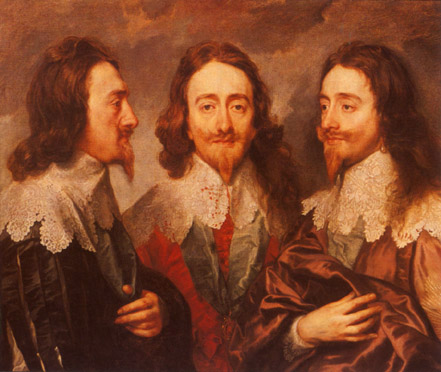 Sunday 1st May marked the beatification of Blessed John Paul II in the Roman Communion, the most beloved Bishop of Rome in modern times. But lesser known is the fact that last Tuesday, 26th April 2011, marked the 350th anniversary of the canonisation of the great Martyr for the Anglican Church, King Charles Stuart I.
On 26th April 1661, the Convocations of Canterbury and York, meeting in joint session, adopted the State Service in honour of the Royal Martyr, which Service was henceforth incorporated into the 1662 Book of Common Prayer: in the Liturgy of 30th January, Charles I is declared 'Saint' and 'Martyr.' The Martyr King died for the proper recognition of the Sacraments and the Apostolic Order of the Church. Saint Charles Stuart is thus the only Saint canonised by the Church of England after the Reformation.
REMEMBER!
The whole world awoke and rejoiced in astonishment to find itself Anglican...
 Friday 29th April, the Royal Wedding of Britain's future King and his bride.
Truly magnificent in every way, spiritually, liturgically, musically, a reverent, dignified, orthodox Christian witness to a secularised nation - the service used was the Alternative Marriage Service of the 1928 Proposed English Book of Common Prayer.
Let us pray for the Duke and Duchess of Cambridge and for their union, that it may be blessed, happy and holy.
Let us pray for the Duke and Duchess of Cambridge and for their union, that it may be blessed, happy and holy.
Temporary Married Priesthood for the Ordinariates?
An interesting development...
In an interview-book entitled 'A Great Heart. Homage to John Paul II,' Secretary of State Cardinal Tarcisio Bertone said there is continuity between John Paul II and Benedict XVI in 'welcoming into the Catholic Church former married Anglican pastors [sic], allowing them to live in matrimony.' The Cardinal explained that this 'welcome that still continues today and that the recent Apostolic Constitution extends to entire groups of people and parishes, albeit standing firm on the issue of celibacy for priests, asking that in the future married priests should not become the norm in these Orders.'
Wednesday, April 20, 2011
40

Today, 20th April 2011, is my Fortieth Birthday! Thank you all for your prayers for me on this special day...
Our Blessed Lady of Walsingham, pray for us!
Saint Chad of Lichfield, pray for us!
Saint Charles, King and Martyr, pray for us!
Monday, April 18, 2011
Holy Week at Saint Barnabas Church


 Monday in Holy Week, 18th April,
 Tuesday in Holy Week, 19th April
and Wednesday in Holy Week, 20th April
Holy Eucharist, 12 Noon
Maundy Thursday, 21st April
Holy Eucharist, 12 Noon
Sung Holy Eucharist, Stripping of the Altars and Watch before the Altar of Repose, 7pm (Incense)
Good Friday, 22nd April
Morning Prayer, Litany and Holy Communion from the Reserved Sacrament 9.30am (Incense)
Three Hours’ Devotion, 12 Noon to 3pm
Stations of the Cross, 3pm
Sacramental Confessions, 4pm-6pm
Evensong and Litany, 7pm
Easter Even, 23rd April
Easter Egg Hunt, 10.30am
Sacramental Confessions, 1pm-2pm
Easter Flower Ministry, 9am-3pm
Sung Holy Eucharist of the Easter Vigil, 8pm (Incense)
Easter Day, 24th April
Sung Holy Eucharist, 9am
Sung Holy Eucharist, 11am
Easter Monday, 25th April,
Easter Tuesday, 26th April
and Easter Wednesday, 27th April
Holy Eucharist, 12 Noon
Easter Thursday, 28th April
Holy Eucharist, 7pm
Easter Friday, 29th April
and Easter Saturday, 30th April
Holy Eucharist, 12 Noon
Sunday, April 17, 2011
Missal Moment II
Courtesy of the Latin Rite Diocese of Charlotte, North Carolina and my brother, Father Brandon Jones, Administrator of Saint Joseph's Church, Asheboro. The 'Anglicisation' of the Roman liturgy continues!
His Mighty Resurrection

Alleluia! Christ is risen! The Lord is risen indeed! Alleluia!
‘When thou hadst overcome the sharpness of death, thou didst open the Kingdom of Heaven to all believers.’ As we celebrate the forty days of Our Lord’s risen presence with His disciples before His glorious Ascension, a mystical forty day Easter feast answering the austerities and disciplines of the forty day Lenten fast with inexpressible joy, let us consider the consequences of the Resurrection of Jesus Christ from the dead: what occurs for us in the wake of that most significant event in all of human history?
The Resurrection of Our Lord Jesus Christ from the grave is the foundation and crowning event of the orthodox Christian Faith, the basis of all that we believe and profess. ‘Moreover, brethren, I declare unto you the gospel which I preached unto you, which also ye have received, and wherein ye stand; by which also ye are saved, if ye keep in memory what I preached unto you, unless ye have believed in vain. For I delivered unto you first of all that which I also received, how that Christ died for our sins according to the scriptures; and that he was buried, and that he rose again the third day according to the scriptures… if Christ be not risen, then is our preaching vain, and your faith also is vain… but now is Christ risen from the dead, and become the firstfruits of them that slept’ (I Corinthians 15.1-4, 14, 20).
For this reason, Easter Day is the original and unique Christian festival, the celebration from which the rest of the Christian liturgical year springs. Easter is so important and vital that it is not merely one Day, but a Day that expands into eight, and then forty. The initial eight days of the Easter commemoration, the great Octave, becomes the source for all other Octaves in the Church Year. The eight days signify the New Creation: God created the world in six days, rested on the seventh, and recreated the world by Christ’s Resurrection on the eighth, the first day of the week, the Lord’s Day, the new day of Christ’s victory over death. Ancient Christian art and architecture reinforce this truth – early baptisteries of the patristic period feature octagonal, eight-sided, buildings and baptismal pools, showing in sign and form that through the regenerative and saving waters of Baptism we are plunged into the death and Resurrection of Christ and made partakers of the New Life, the New Creation inaugurated by the Lord Jesus in His bodily Resurrection (Romans 6.1-11, Hebrews 9.13-15, I Saint Peter 3.21-22, Titus 3.5). The day of our Holy Baptism was our own Easter Day, the day of our new birth in Christ and the pledge of our own Resurrection from the dead. The Church is first and foremost the community of the Resurrection, the band of faithful disciples of Jesus which worships and serves the Risen Lord of Glory, the Mystical Body of Christ indestructibly identified with and supernaturally and sacramentally united to her deathless Head (I Corinthians 12.12-14, Galatians 3.27).
The Resurrection of Jesus Christ is the greatest and most profound truth of all, the supreme and central Mystery of our faith with which the Apostles began their preaching of the Gospel after the bestowal of the Holy Ghost on Whitsunday. Our Redemption was won by Christ’s death on the Cross of Calvary; by His mighty Resurrection, eternal life is given to us. The Resurrection is the ground of the Church’s continual triumph, the cause of her endless rejoicing, the source and summit of her faith and life. Until the advent of God the Word in human flesh in the Incarnation and His conquest over death, the entire human race suffered in a state of rejection and alienation from God, far from God because of sin, enslaved in spiritual death. This misery continued until the Resurrection of Christ, which was our deliverance and salvation. Through His death on the Cross, His descent into hell and His magnificent Resurrection, Our Lord has raised His people to the hope of heaven – ‘When he ascended up on high, he led captivity captive and gave gifts unto men. Now that he ascended, what is it but that he also descended first into the lower parts of the earth? He that descended is the same also that ascended up far above all heavens, that he might fill all things’ (Ephesians 4.8-10).
The Lord Jesus, descending to the dead, took hell captive, He destroyed it, He put death to death; He overthrew and bound our last enemy (I Corinthians 15.26). Our Divine Lord annihilated the power of death over us. Now in Christ, our physical death becomes but a blessed transition from this fallen world to the age of the world to come, to the larger life in which we shall be received more and more into His joyful service and in which we, and His servants everywhere, shall win the eternal victory. Because of the Resurrection of Christ, we shall eternally grow and develop into the life of God in the land of light and joy in the fellowship of the Saints, as we go from strength to strength, and with open face beholding as in a glass the glory of the Lord, are changed into the image of Jesus from glory to glory, by the Spirit of the Lord (II Corinthians 3.18). Now in Christ, bodily death is for us only a temporary breach, for by His mighty Resurrection, Christ has opened to us the gates of everlasting life, the general Resurrection of the body. Now we know we shall die in the sure and certain hope of the Resurrection unto eternal life through Jesus, at whose coming in glorious majesty to judge the world, the corruptible bodies of those who sleep in Him shall be changed, and made like unto his own glorious body, according to the mighty working whereby he is able to subdue all things unto himself (Philippians 3.21). ‘Beloved, now are we the sons of God, and it doth not yet appear what we shall be; but we know that, when he shall appear, we shall be like him, for we shall see him as he is’ (I Saint John 3.2). The Resurrection of Christ is the assurance of our own resurrection.
To depart this life is to be with Christ, for we know we have a house not made with hands, eternal in the heavens, many mansions in our Father’s house, a place prepared for us, in which Our Lord will receive us unto Himself, that where He is, we may be also. The joy and blessedness of the heavenly Church, the heavenly Jerusalem, the city of the living God, the Church of the first-born written in heaven, with Apostles, Prophets, Confessors, Virgins and Martyrs, await us in their perfect fullness and fulfillment. In communion with all saints and angels and each other, free from sorrow, suffering, pain and labours, and seeing God face and face as we worship and reign forever before the Throne of the Lamb, we shall literally live to witness the consequences of Easter!
God bless you!
Thursday, April 14, 2011
The Easter Canticle

For us, as we approach the solemnities of Holy Week and Easter...
CHRIST our Passover is sacrificed for us: * therefore let us keep the feast,
Not with old leaven, neither with the leaven of malice and wickedness; * but with the unleavened bread of sincerity and truth.
CHRIST being raised from the dead dieth no more; * death hath no more dominion over him.
For in that he died, he died unto sin once: * but in that he liveth, he liveth unto God.
Likewise reckon ye also yourselves to be dead indeed unto sin, but alive unto God through Jesus Christ our Lord.
CHRIST is risen from the dead, * and become the first-fruits of them that slept.
For since by man came death, * by man came also the resurrection of the dead.
For as in Adam all die, * even so in Christ shall all be made alive.
Glory be to the Father, and to the Son, * and to the Holy Ghost;
As it was in the beginning, is now, and ever shall be, * world without end. Amen.
As we prepare to celebrate together the Feast of Feasts and Queen of Feasts, the Christian Passover, the glorious Third-Day Resurrection of our Lord and Saviour Jesus Christ from the dead on Easter Day, let us turn to contemplate one of the greatest liturgical treasures in Anglicanism, and yet one of the least familiar and utilised, the beautiful Easter Canticle found on page 162 in the Prayer Book.
In the ancient Sarum Use, the liturgical rite used in the Church of England before the sixteenth century, the Easter Canticle was sung before Morning Prayer on Easter morning during a procession of the Cross, after which procession the Cross was placed in a side chapel next to the High Altar and honoured by the faithful. From this service in the Sarum Use and the previous practice of singing the Easter Canticle are derived the text and practice established by our Book of Common Prayer today. In the first English Prayer Book of King Edward VI, issued in 1549, the service of singing the Easter Canticle, introductory to the festivities of Easter morning Matins and Holy Communion, was retained. Archbishop Thomas Cranmer of Canterbury, at the time in which our liturgy was reformed and translated into English, had intended to create a vernacular version of the processional of the Cross on Easter morning comparable to the ancient rite found in the Sarum liturgy, but the project was never completed: our Easter Canticle is the sole surviving remnant of the original devotion. In the second English Prayer Book of Edward VI, promulgated in 1552, the Easter Canticle was appointed to replace the Venite, exultemus Domino at Morning Prayer on Easter Day - but strangely, the Alleluias found in the ancient form were omitted in 1552, never to be reinstated. In the Restoration English Prayer Book of King Charles II, published in 1662, the first section of our contemporary Easter Canticle, I Corinthians 5.7-8, was added to the older text and the Gloria Patri was added at the end of the three sections of the enlarged hymn. Our 1928 American Prayer Book expanded the use of the Easter Canticle, replete with the re-added Gloria Patri which had disappeared in the 1789 American
What does the Easter Canticle teach us about the mighty Resurrection of Our Lord? In I Corinthians 5.7-8, Saint Paul illustrates Our Lord’s triumphant conquest of death as the fulfilment of the Jewish feasts of Unleavened Bread and Passover: as every Jewish family cleansed its home of leavened bread before the feast (Exodus 12.14-20), so Christians are urged to remove sin from their midst and to celebrate the Liturgy in purity and holiness of life. Christ is our Passover, our Paschal Sacrifice, the revelation of the true meaning of the day of preparation for the Old Testament Passover. On the day of preparation, unblemished lambs were slaughtered in the
In Romans 6.9-11, we are reminded that Our Lord’s real human death is unrepeatable and has resulted in His ultimate physical glorification and immortality: because Christ destroyed death by His own death, to which He was freely and voluntarily subject, His risen humanity, body and soul, is forever victorious over death. Now for all eternity Christ lives, Christ conquers, Christ reigns – and we shall live, conquer and reign because of Him, in Him and through Him and for Him. Christ has destroyed the power of sin through death, and, thus united to Him in His death, we shall overcome sin and live forever in Him.
In I Corinthians 15.20-22,
And finally, as we ready our hearts and souls for the Resurrection of Our Lord, let us compare the biblical theology and profound eloquence of the Easter Canticle in the Prayer Book tradition with another truly exquisite liturgical hymn for Easter Day, that composed by Saint John of Damascus, the Seal of the Fathers and the last great synthesiser of Christian theology who died in AD 750, the Canon of Easter as found in the Eastern Rite:
It is the Day of Resurrection! Let us be radiant, O people! Easter! The Lord's Easter! For Christ our God has brought us from death to life, and from earth unto heaven, as we sing triumphant hymns! Let us purify our senses and we shall behold Christ, radiant with inaccessible light of the Resurrection, and shall hear Him saying clearly, ‘Rejoice!’ As we sing the triumphant hymns, let heavens rejoice in a worthy manner, the earth be glad, and the whole world, visible and the invisible, keep the Feast. For Christ our eternal joy has risen! Come let us drink a new beverage, not miraculously drawn from a barren rock, but the fountain of Incorruption springing from the tomb of Christ in whom we are established. Now all things are filled with light: heaven and earth, and the nethermost regions. So let all creation celebrate the Resurrection of Christ, whereby it is established. Yesterday, O Christ, I was buried with Thee, and today I arise with thy arising. Yesterday I was crucified with Thee. Glorify me, O Saviour, with Thee in thy Kingdom. When at dawn, the women with Mary came and found the stone rolled away from the sepulchre, they heard from the angel: Why seek among the dead, as if He were a mortal man, Him who lives in everlasting light? Behold the grave-clothes. Run and tell the world that the Lord is risen, and has slain death. For He is the Son of God who saves mankind…
Alleluia! Christ is risen! The Lord is risen indeed! Alleluia! May the Lord Jesus Christ, our True God, the Lamb slain from the foundation of the world and risen from the dead, bless you and all you love in the coming Eastertide!
Sunday, March 20, 2011
Mid-Lent: The Eucharist as Refreshment
 For us as we approach the Fourth Sunday in Lent...
Our Lord Jesus Christ calls us, beckons us, to refreshment this day as we take a hopefully well-deserved pause from our Lenten discipline, and lighten the mood with the festal vestments and colour of rose. It is time to allow Christ to refresh us, and to take away our burdens, and to renew us, as we yet offer ourselves in self-denial and penance. The Lord desires us to turn to Him, and Him alone, to Him who is the true refreshment of the human person. Christ is our rest, our renewal, our new Life.
He speaks of Himself in comforting terms, as One who nourishes, who refreshes, who revitalises, and ever makes new.
‘Come unto me all ye that travail and are heavy laden, and I will refresh you.’ ‘Take my yoke upon you, and learn of me, for my yoke is easy, and my burden is light.’ ‘But whosoever drinketh of the water that I shall give him shall never thirst; but the water that I shall give him shall be in him a well of water springing up into eternal life.’ ‘He who followeth me shall have the light of life.’
The classic definition of refreshment is simply - to make stronger, more energetic, to replenish, to renew, to revive, to re-enliven.
Jesus Christ, Who is Life and Light, revivifies the body and soul, restoring to man’s nature and being the very Life of God, divine grace, making us partakers of the communion of God’s life - the Life God gives, receives and shares eternally as the Tri-Hypostatic Communion of Love, Father, Son and Holy Ghost. Christ communicates to man the life of the Trinity, unending life, everlasting life, eternal life.
Christ offers Himself to us as our ‘re-fresh-ment,’ the One who restores, who makes whole, who makes us new and alive.
Jesus says: ‘I am the way, the truth, and the life.' Life.
Jesus Christ is the New Life. Jesus has come, he says, so that we may ‘have life, and have it more abundantly.’
On Refreshment Sunday, the Fourth Sunday in Lent, Holy Church proffers once again an opportunity to meditate on the greatest and most sublime of all God’s gifts to us on earth, the most unfathomable of mysteries, the Holy Eucharist, the true living Body and Blood of Jesus Christ, the verity of which is summarised in Saint John’s Gospel, chapter 6. The New Moses gives the New People of God the New Manna, the Bread from heaven, to refresh those who are weary, to feed them supernaturally.
The unforgettable feeding of the five thousand, the feeding miracle of Our Lord so familiar to us, actually reveals to us a dimension of our lives as Christians which we perhaps infrequently examine: Jesus Christ refreshes, renews, energises, revitalises us as members of His mystical Body the Church, through the Holy Eucharist, which is nothing less but the entire Person of Our Lord, God and Man, under the form of bread and wine. The Eucharist makes each one of us personally one with God and with one another. The Eucharist feeds us with Divine Life.
The Eucharist, the Body and Blood of Christ, creates and sustains the Church, which is Christ’s own Body. The Eucharist is the Lord’s Own Service, the supreme act of Christian worship to be faithfully attended every Lord’s Day. It is not just a symbol or a sign - it is Jesus Christ Himself. It is our Sacramental God, present to us under the veil of a mystery. It is our refreshment, our life, our source of being. The Eucharist is the closest any of us will ever come to God this side of heaven. The Holy Eucharist is truly ‘heaven on earth.’
The historical event of the Last Supper, the New Passover, which fulfils the prefigure, the coming attraction of the feeding of the five thousand, is daily reproduced on the Altars of the Holy Catholic Church: Jesus comes to us in that Holy Sacrament which the feeding miracle is intended to image and prophesy for us. However
Manna - what is it? - the heavenly bread with which God miraculously fed the children of
We must eat Christ’s Flesh and drink His Blood in Holy Communion in order to be saved and have eternal life. This is the teaching of Jesus Christ, not just of the Church Fathers or the medieval theologians. The Supper of the Lord is generally necessary to salvation (
‘Verily, verily, I say unto you: Except ye eat the flesh of the Son of Man and drink His blood, ye have no life in you. Whoso eateth my flesh and drinketh my blood hath eternal life, and I will raise him up at the last day; for my flesh is meat indeed, and my blood is drink indeed. He that eateth my flesh and drinketh my blood dwelleth in me and I in him.’
Echoed in the writing of that genius of Anglicanism, Archbishop Thomas Cranmer, the truth is reiterated in the Eucharistic liturgy of the Anglican Church; ‘Grant us therefore, gracious Lord, so to eat the flesh of thy dear Son Jesus Christ, and to drink his blood, that our sinful bodies may be made clean by his body, and our souls washed through his most precious blood, and that we may evermore dwell in him, and he in us.’
The Eucharist is refreshment, nourishment for the body and the soul, an often-neglected teaching of our sacred Faith.
The Anglican Prayer Book Catechism, an authoritative document, teaches:
Q: What are the benefits whereof we are partakers thereby in the Holy Communion?
A: The strengthening and refreshing of our souls by the Body and Blood of Christ as our bodies are by the Bread and Wine.
What precisely are Anglicans to believe about the Holy Eucharist, our Refreshment, our true Manna which feeds us unto eternal life? The Prayer Book calls the Eucharist ‘these holy mysteries.’ It cannot be defined - we cannot define the indefinable. We can only maintain a reverential awe in the face of such mystery.
From Queen Elizabeth I, a reasonably Anglican voice, we hear:
Christ was the Word that spake it. He took the bread and brake it. And what His word doth make it, I do believe and take it.
Ours is not a religion based on a system of ethics or morality, ours is not a sophisticated philosophical school or lyceum of ideas, ours is not a mutual appreciation society -- our religion is a Person, ours is a religion of the God-Man Jesus Christ. Ours is a religion with a Body broken and Blood shed, a Blood-bought religion, a Body religion. And that Body broken and Blood shed are given to us every day through the hands of Christ’s chosen men, His apostolic ministers, in the Blessed Sacrament of the Altar. Jesus Christ is the Refreshment of all men.
Subscribe to:
Posts (Atom)
Comprovincial Newsletter and Video - September 2026
The Anglican Province of America Comprovincial Newsletter and Video - September 2026

-
MEDIA RELEASE FULL COMMUNION AGREEMENT (COMMUNIO IN SACRIS) BETWEEN THE ANGLICAN PROVINCE OF AME...
-
Pope Leo IX, Last of the Bishops of Rome in communion with the rest of Christendom. The Bishop of Rome is historically the first Bi...
-
 Following on the intriguing discussion at The Continuum , below is the carefully-researched essay by Father John Jay Hughes found in his 197...

.jpg)