Friday, March 22, 2013

Holy Week and Easter Week 2013 at Saint Barnabas Dunwoody


Passion Saturday, 23rd March
Workshop for Making Palm Crosses, 10am

Palm Sunday, 24th March
Sung Holy Communion
and the Blessing and Distribution of Palms,
9am and 11am

Monday in Holy Week, 25th March
Tuesday in Holy Week, 26th March
and Wednesday in Holy Week, 27th March
Holy Communion, 12 Noon

Maundy Thursday, 28th March
Holy Communion, 12 Noon
Sung Holy Communion, Stripping of the Altars and
Watch before the Altar of Repose, 7pm (Incense)

Good Friday, 29th March
Morning Prayer, Litany and Holy Communion
from the Reserved Sacrament 9.30am (Incense)
Three Hours’ Devotion, 12 Noon to 3pm
Stations of the Cross, 3pm
Sacramental Confessions, 4pm-6pm
Evensong and Litany, 7pm

Easter Even, 30th March
Easter Egg Hunt, 10.30am
Sacramental Confessions, 1pm-2pm
Easter Flower Ministry, 9am-3pm
Sung Holy Communion of the Easter Vigil, 8pm (Incense)

Easter Day, 31st March
Sung Holy Communion, 9am
Sung Holy Communion, 11am

Easter Monday, 1st April
Easter Tuesday, 2nd April
and Easter Wednesday, 3rd April
Holy Communion, 12 Noon

Easter Thursday, 4th April
Holy Communion, 7pm

Easter Friday, 5th April
and Easter Saturday, 6th April
Holy Communion, 12 Noon

Monday, March 18, 2013

Authentic Anglicanism: Catholic and Evangelical


A Traditional Anglican response to George Weigel's call... from 2008.

1. Communion with Jesus Christ, Personal and Real: ‘Are you born again?’ 'Do you have a personal relationship with Jesus?’ We often hear from our evangelical protestant brethren that we ought to have a ‘personal relationship’ with Jesus Christ to be faithful Christians, and that this relationship is prerequisite for salvation. Although we must not confuse our personal relationship with Our Lord in daily conversion and faith with being ‘born again’ or ‘born from above’, regeneration, which mystery of grace is conferred sacramentally in Holy Baptism, there can be no doubt that our evangelical friends are right, and that they should have no monopoly on the truth that living Christian witness requires a personal communion with Our Blessed Saviour. Every orthodox Anglican should be able to say most earnestly that he has a personal relationship with Jesus Christ. The Lord Jesus Christ, the Eternal Word, the Incarnate Son of God and Son of Mary, is the crucified, risen and glorified Redeemer of all mankind – only in a personal and intimate communion with the Lord Jesus Christ, God made Man, can any human being be capable of ultimate fulfilment or of the discovery of the true meaning, purpose, end, dignity and glory of human life. As the Holy Fathers of the Church teach us, Jesus Christ not only reveals God to man; as Man, He reveals man to himself. We must know, adore and love Jesus; it is not enough merely to know about Our Lord in an intellectual or cognitive sense. Either Jesus is Lord of all, or He is not Lord at all…

2. Personal Holiness - the Greatest Attractant for Evangelisation. The Holy Fathers of the Church affirm that the greatest means of evangelism is holiness of life. One person sanctified by divine grace and advancing in the way of holiness is more powerful for evangelism than a thousand unconverted or nominal, ambivalent souls. People at large will be attracted to the Church more by the holiness of our lives than by anything else, for personal holiness has an inherent power to attract, convert and transform: the power is the Holy Ghost, Who makes the Saints His icon, His image. Saint John of Damascus instructs that the Son is the Image of the Father and the Holy Ghost is the Image of the Son. But where or who is the image of the Holy Ghost? It is the Saint, the human being who partakes of the divine nature (2 St Peter 1.4) and is changed from strength to strength and from glory to glory, who bears the image of that invisible Spirit Who ‘goes where He wills’ (St John 3.8). The invisible Spirit is made visible in His Saints. To escape a corrupt and hedonistic world, the ancient Desert Fathers retreated into the wilderness for the sweet solitude of prayer and communion with God; but the holiness of their lives was so compelling that men and women by the thousands flocked to the desert to be near them and learn Christ from them. We can and should learn from the example of the Fathers. Encouraged by their examples and aided by their prayers, we ought to turn to the Saints and follow the trail of holiness blazed by our forefathers in the Faith. The degree of our evangelism will be successful only to the degree that we seek to cultivate holiness in our own lives. We sanctify ourselves so that others may be sanctified.

3. Bible-Centred, Bible-Saturated Religion. Jesus Christ, the Word of God, lives mystically and salvifically in His written Word. Saint Jerome pronounces, ‘Ignorance of Scripture is ignorance of Christ.’ A living Christian witness demands more than a simple profession of faith or regular church attendance; we are called to move from passive observance to full participation in the Christian life. God beckons us to submit our whole selves to the authority and Lordship of Jesus Christ and to gauge our lives by the standard of the Gospel, rather than attempting to mould the Gospel to our own limited experience. It is the Christian Faith that should transform us; we should not seek to change the Gospel into a projection of our desires and attitudes, that is, to re-make the Gospel in our own image based on our own experience. We all know painfully well the result of the exchange of the Gospel for subjective or emotional experience, as we have seen its consequences so vividly as of late in mainline ecclesial bodies and in society in general. We are summoned to be lovers and students of the Holy Scriptures: if we want to know how God works in our own lives, in our relationships with other people, and in the Church and Sacraments, we will be assiduous readers of the Holy Bible and will take its Word into our hearts and lives. If we do not read, mark, learn and inwardly digest the Holy Scriptures with the most careful dedication, we shall never grow or mature in our faith, nor shall we become the Christians and Saints God wants us to be. The Bible, in its theological, spiritual and moral application, should serve as the unique, indispensable and inexhaustible resource for the faithful Anglican Catholic. Let’s go to Bible Study!

4. The Sacramental System - the Covenantal Means of Grace. Our Anglican and Catholic Faith teaches us that we are not people of the written Word only; we are united to Our Lord by the Sacraments of the New Testament. The Seven Holy Sacraments of the Catholic Church, Baptism, Confirmation, Eucharist, Penance, Matrimony, Orders and Unction, are the direct and most effective means of becoming holy, becoming what God wants us to be: they are given by Our Lord and the Apostles to serve us as covenantal means or channels of grace that assure and guarantee the grace and power of Christ in our lives. We should seek to receive the Holy Sacraments regularly and frequently, with faith, love and repentance. If we are to allow ourselves to be more closely conformed to the image and likeness of Jesus Christ, and to be empowered to serve as His faithful evangelists and disciples, we should be absolutely unfailing in our attendance at the Holy Sacrifice of the Mass on every Sunday and great Feast of the Church, and we should receive the Precious Body and Blood of Christ in Holy Communion with the greatest fervour. By the Blessed Sacrament, we become one Body with Christ, that He may dwell in us and we in Him. We should also strive to make a consistent and devout use of the Sacrament of Penance. By our sacramental communion with Christ, the life of Our Lord will be actualised in us and we shall be truly elevated into faithful disciples of the Saviour. A true Christian life is one nourished with the Sacraments, an Altar-centred life in which we live a Eucharistic fellowship - in the deepest communion with our Eucharistic Lord. Genuine evangelism is Baptismal, Confirmational and Eucharistic evangelism.

5. Orthodox Liturgical Worship. ‘Do this in remembrance of Me.’ The liturgical life of the Church, the sacrifice of praise and thanksgiving, through which the Holy Sacraments are administered and the Divine Office of the Church is offered, anamnetically makes present the Lord Jesus Christ in His saving Person and Work. The liturgy should therefore be celebrated ‘in the beauty of holiness,’ the ars celebrandi, in which the fullness of the Apostolic Tradition is expressed and embodied with all the reverence, transcendence, dignity, and the sense of the numinous that it deserves. The liturgy is not only the work of the People of God; it is the Incarnate Lord Himself present to us in mystery and sign. Only the very highest forms of music, architecture, ceremonial and Common Prayer are fitting for the celebration of the worship of the Church, elements which unite seamlessly to render unto the Holy Trinity what we call ortho doxa, right glory, the right worship of Almighty God. The Holy Eucharist, the Daily Office and personal prayer should routinely combine in the Christian life to create a dynamic and graced renovation of the believer. ‘It is the Mass that matters!’

6. Active and Involved Christian Formation. The administration of the Sacraments must also be accompanied by a living and active presentation of the Gospel message in preaching, teaching and catechesis: in order for the Sacraments to be fruitful and efficacious, they must be received purposely with faith, hope and love. To divorce the preaching of the Gospel from the ministration of the Sacraments is to empty the Sacraments of their potential power and transformative energy and to reduce the sacramental life to the mechanical and superstitious. All Churchmen should therefore take the most conscientious care that those who receive the Sacraments be afforded the maximum level and best quality of Christian formation. Especially the Sacraments of Baptism, Confirmation, Holy Eucharist and Matrimony require that those who sponsor or receive them do so in a committed and devoted way and that those who desire them know the basic truths of the Gospel and manifestly intend to live a Christian life.

7. 'The Obedience of Faith' - Fidelity to Holy Tradition and Avoidance of Private Judgement. Catholic Christianity is a revealed Religion. Human convention or philosophy has not contrived the Gospel, for the Christian Faith is a divine revelation directly communicated by God. The fullest expression of the Gospel is located in Holy Scripture and Holy Tradition, one divine revelation communicated to the Church in two modes but containing the same Rule of Faith. As Saint Basil the Great professes, ‘Holy Scripture is fulfiled, clarified and interpreted by Holy Tradition.’ The Anglican axiom is: the Bible and the primitive Church. For Anglicans, the Holy Scriptures, the Holy Tradition and the Holy Church are absolutely inseparable and together transmit the saving Word of God for mankind’s salvation. If we are faithfully to live the Gospel and receive it in its entire truth, we must submit all private judgement in matters of doctrine, faith and morality to the authority of the universal, ancient and consentient Tradition of the Undivided Church. We are the children of the Church, called to live, worship, work, obey and pray in the heart of the Church. We are Churchmen, not sectarians. We are called to what Saint Paul characterises as the obedience of faith (Romans 1.5, 16.26).

8. Faithful Discipleship. Through Jesus Christ, present in His Word and Holy Sacraments, we are drawn by supernatural grace into a sanctifying and divinising union with Him: justified by faith working in love, we are called to an ever-deepening holiness and equipped by the Holy Ghost for good works in the life of grace. ‘For by grace are ye saved through faith; and that not of yourselves: it is the gift of God: Not of works, lest any man should boast. For we are his workmanship, created in Christ Jesus unto good works, which God hath before ordained that we should walk in them’ (Ephesians 2.8-10). In the Church, the School of Sanctity and the Ark of the New Covenant, we should learn to be faithful disciples and to eschew and reject all that is not of God, Who has brought us to the New Life of Christ. Christ’s life, death and resurrection have made us a New Creation.

9. Personal Evangelism. The New Testament Church, which is the New Israel, the ‘Israel of God’ (Galatians 6.16), is ‘a chosen generation, a royal priesthood, an holy nation, a peculiar people’ (I St Peter 2.9). In Christ, we are kings and priests unto God and His Father through our Baptism and Confirmation. Therefore, the common priesthood of the baptised shares in Christ’s Messianic Offices of Prophet, Priest, and King, and is given the Great Commission so that all the faithful, the sancta plebs Dei, the holy people of God, may be true witnesses of Christ to the whole of creation. We are all to be sent out, ‘apostled,’ to preach Christ and Him Crucified, and thus we should be formed and readied by the Church to teach the Gospel in word and action. Our determination to welcome others into the Church and to encourage them to follow Jesus Christ, as well as our eagerness clearly to teach the Faith Once Delivered unto the Saints, should be essential components of our Christian witness. Let us perfect the Saints and the work of the ministry, and edify the Body of Christ (Ephesians 4.12).

10. Unswerving Commitment to the Anglican Tradition. God has remarkably blessed us and we have a goodly heritage. Our special privilege and responsibility as orthodox Anglicans is to cherish thankfully, preserve unimpaired and transmit assertively those tremendous gifts which have been entrusted to us as children of the Ecclesia Anglicana. Rigorous commitment to the classical Book of Common Prayer and to the theological, doctrinal, moral, spiritual, liturgical and pastoral patrimony and ethos of orthodox Catholic Anglicanism should define our mission and our evangelistic efforts. To whom much has been given, much shall be required. Part of our vocation surely lies in our commission boldly to proclaim the Gospel as incarnated and inculturated in our Branch of Christ’s Church and to recall our accountability for that rare treasure which has been commended to us. Nothing evangelises like integrity and authenticity. Let us keep the Faith – and pass it on to the world!

Friday, March 15, 2013

Pope Francis on Anglicanism

Pope Francis (right) with Archbishop Venables (centre) 
'...He called me to have breakfast with him one morning and told me very clearly that the Ordinariate was quite unnecessary and that the church needs us as Anglicans...'
- Archbishop Gregory Venables of the Iglesia Anglicana del Cono Sue de America quoting Pope Francis of Rome 

Tuesday, March 12, 2013

Anglican Life Adventure Camp Registration


Please follow this link for registration forms for this year's Anglican Life Adventure Camp.

We look forward to many campers joining us this coming June in Ashe County, North Carolina.

Wednesday, March 06, 2013

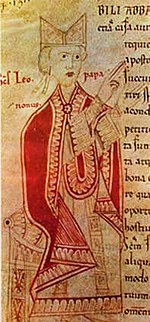
The First Millennium Church and the Bishop of Rome

Pope Leo IX, Last of the Bishops of Rome in communion with the rest of Christendom.


The Bishop of Rome is historically the first Bishop of the Church, the primate and chief representative of the Church Catholic. These are all positive and endearing characteristics, from which neither Orthodoxy nor Anglicanism has ever formally dissented: the Roman Church deserves our honour and respect, and all due devotion and obedience as guardedly allowed and mandated by the Undivided Church of the First Millennium. We accord to the Bishop of Rome that which the First Millennium Church accorded his office. Saint Ignatius of Antioch, Saint Irenaeus of Lyons and Saint Cyprian of Carthage proclaim that the Bishop of Rome 'presides in love and honour.' Anglicans honour the Roman See as primus inter pares, first amongst equals in the undivided and consentient Catholic episcopate. But there are serious problems with the Roman Communion, impediments and barriers which forestall the possibility of Anglicans entering into the Papal fold. We believe Rome fails the strict litmus test of universality, antiquity and consent, the Canon of Saint Vincent of Lerins, in several key areas of Christian doctrine and practice.

The Anglican Tradition does not believe, as Rome does, that the totality and completeness of the whole Catholic Church on earth is contained in and comprehended by the See of Rome. We cannot say, as Rome does, that the Papal Communion is coterminous and coextensive with the One Holy Catholic and Apostolic Church.

The Church Catholic is not identified with or synonymous with the Roman Communion in an exclusive sense, and yet this is precisely what Rome claims for herself. According to Rome, those Churches in communion with the Pope are the Church, and uniquely the Church qua Church. We find that proposition an inadmissible and flatly anti-historical claim. The Papal Church also professes that the Bishop of Rome is infallible ex cathedra, from St Peter's Chair, and exercises a ministry of infallible teaching in faith and morals apart from the consensus of the Catholic episcopate. Rome also contends that the Bishop of Rome possesses universal and immediate jurisdiction over every Church and Christian on earth, disregarding the ancient sees and dioceses which have historically constituted Catholic communion. We maintain that papal infallibility ex consensu ecclesiae and papal universal jurisdiction are contrary to Scripture and Apostolic Tradition. We assert that the Pope is not above Tradition and the Ecumenical Councils, and cannot legislate doctrine in opposition to received universal Tradition or the consensus patricum and consensus ecclesiae.

Saint Augustine of Hippo, in common with all the Church Fathers, teaches that the Church is built upon the Faith of St Peter's Confession in Jesus Christ as True God and True Man: it is the Apostolic Creed, the Faith of the Incarnation professed by Peter, on which the Church is built (St Matthew 16). 'The rock' refers to Our Lord Himself, St Peter's person, St Peter's ministry, and St Peter's confession of faith. There are many equally correct interpretations of Christ's words to Peter.

Saint Cyprian of Carthage teaches that the Chair of Peter, the Petrine ministry, is really the Apostolate, the undivided episcopate of the whole Catholic Church: every bishop of the one Church is 'Peter' and shares in the Petrine commission and authority because of episcopal consecration. No one bishop can claim to be the successor of St Peter in an exclusive sense, because it is the episcopate itself, the apostolic college of bishops, which holds the priesthood, authority and consecration of St Peter.

Saint Gregory the Great, a Bishop of Rome, states there is no such thing as a 'supreme bishop' or a 'bishop of bishops' above the episcopal college.

The Bishop of Rome is indeed the Bishop of Rome, no more, no less, a chief representative bishop of the Catholic world. His role is analogous to that exercised by Peter amongst the Twelve. He is a representative voice, a spokesman, a primate, first amongst equals, primus inter pares. He holds the 'primacy of love' proclaimed by St Irenaeus of Lyons, the 'primacy of honour' affirmed by Saint Cyprian. The Pope is a Vicar of Christ, but not in a unique or exclusive sense again, for every bishop, every latter-day Apostle in the episcopal college, is a Vicar of Christ, the sacramental representative of Our Lord in his local particular Church. For his Diocese, every bishop is Peter, every Bishop is the Apostle. And, according to Sacred Tradition, all bishops are equal in sacramental power and jurisdictional canonical authority within their own local Churches. Such has always been the consentient teaching of the orthodox and catholic Church of Christ.

The modern Papal Claims are just that, modern. The dogmas of papal infallibility ex cathedra and the immediate and universal jurisdiction of the Pope were created at the First Vatican Council of 1870. They are neither universally-received nor ancient. They are novelties, innovations added to the Catholic Faith. Rome has the essential Faith of the Catholic Church, but has added to it that which it should not.

From the Encyclical of the Patriarchs of the Eastern Churches to the Pope of Rome, 1895...

No doubt every Christian heart ought to be filled with longing for union of the Churches, and especially the whole Orthodox world ardently longs for the unity of the Churches in the one rule of faith, and on the foundation of the Apostolic doctrine handed down to us through the Fathers, ‘Jesus Christ Himself being the chief corner stone.’ Agreeably, therefore, to this sacred longing, the Orthodox Church is always ready to accept any proposal of union, if only the Bishop of Rome would shake off once for all the whole series of the novelties that have been privily brought in to his Church, and have provoked the sad division of the Churches of the East and West, and would return to the basis of the Seven Holy Ecumenical Councils, which, having been assembled in the Holy Spirit, of representatives of all the holy Churches of God, for the determination of the right teaching of the faith against heretics, have a universal and perpetual supremacy in the Church of Christ.

For the practical realisation of the pious longing for the union of the Churches, a common principle and basis must be settled first of all; and there can be no such safe common principle and basis other than the teaching of the Gospel and of the Seven Holy Ecumenical Councils. Reverting, then, to that teaching which was common to the Churches of the East and of the West until the separation, we ought, with a sincere desire to know the truth, to search what the One, Holy, Catholic and Orthodox Apostolic Church of Christ, being then ‘of the same body,’ throughout the East and West believed, and to hold this fact, entire, and unaltered.

And indeed for the holy purpose of union, the Eastern Orthodox Church is ready heartily to accept all that which both the Eastern and Western Churches unanimously professed before the ninth century, if she has perchance perverted or does not hold it. And if the Westerns prove from the teaching of the holy Fathers and the Ecumenical Councils that the then Orthodox Roman Church, which was throughout the West, even before the ninth century read the Creed with the [filioque] addition, or accepted the doctrine of a purgatorial fire, or sprinkling instead of baptism, or the immaculate conception of the Ever-Virgin, or the temporal power, or the infallibility and absolutism of the Bishop of Rome, we have no more to say. But if, on the contrary, it is plainly demonstrated, as those of the Latins themselves, who love the truth, also acknowledge, that the Eastern Orthodox Church holds fast the anciently transmitted doctrines which were at that time professed in common both in the East and the West, and that the Western Church changed them by innovations, then it is clear, even to children, that the more natural way to union is the return of the Roman Church to the ancient doctrinal and administrative condition of things; for the faith does not change in any way with time or circumstances, but remains the same always and everywhere, for ‘there is one body and one Spirit,’ it is said, ‘even as ye are called in one hope of your calling; one Lord, one faith, one baptism, one God and Father of all, who is above all, and through all, and in you all.'

Having recourse to the Fathers and the Ecumenical Councils of the Church of the first nine centuries, we are fully persuaded that the Bishop of Rome was never considered as the supreme authority and infallible head of the Church, and that every bishop is head and president of his own particular Church, subject only to the synodical ordinances and decisions of the Church Universal as being alone infallible, the Bishop of Rome being in no wise excepted from this rule, as Church history shows. Our Lord Jesus Christ alone is the eternal Prince and immortal Head of the Church, for ‘He is the Head of the body, the Church,' who said also to His disciples and apostles at His ascension into heaven, ‘Lo, I am with you alway, even unto the end of the world.’

Each particular self-governing Church, both in the East and West, was totally independent and self-administered in the time of the Seven Ecumenical Councils. And just as the bishops of the self-governing Churches of the East, so also those of Africa, Spain, Gaul, Germany and Britain managed the affairs of their own Churches, each by their local synods, the Bishop of Rome having no right to interfere, and he himself also was equally subject and obedient to the decrees of synods. But on important questions which needed the sanction of the universal Church an appeal was made to an Ecumenical Council, which alone was and is the supreme tribunal in the universal Church. Such was the ancient constitution of the Church; but the bishops were independent of each other and each entirely free within his own bounds, obeying only the synodical decrees, and they sat as equal one to another in synods. 


Wednesday, February 27, 2013

Israel and Palestine 2014


Please consider joining us on our third Traditional Anglican pilgrimage to the Holy Land...

Following the Faith
20th February 2014 - 1st March 2014
Sponsored by Harmony International
HIGHLIGHTS:
A pilgrimage to the Holy Land is an utterly irreplaceable and unique experience that entirely revolutionises one's perspective on the Holy Scriptures, the history and teaching of the Faith and the great story of man's redemption. We would love for you to join us in 2014! 

Monday, February 11, 2013

Reconciliation Working Group


The following is the report delivered to the House of Bishops of the Anglican Province of America and the Anglican Church in America on the work of the Reconciliation Working Group for the two churches.


The APA-ACA Reconciliation Working Group met at St. Barnabas Church in Atlanta, Georgia, November 8-9, 2012, with Archdeacon Erich Zwingert (APA) and Bishops Chandler Jones (APA), George Langberg (ACA) and John Vaughan (ACA) attending. The group had previously agreed to work on a common version of the Constitution and Canons to be proposed for adoption by the two jurisdictions at an appropriate time. The agreed methodology was to:
a) compare the current APA and ACA versions of these documents with their common starting point, the 1993 ACA Constitution and Canons,
b) discuss the changes each body has made to the 1993 document, and
c) incorporate those changes which have proved most workable and beneficial into the proposed version, eliminating verbiage deemed to be either redundant or no longer applicable.

Following this approach, the group produced a composite version of the Solemn Declaration and Constitution, greatly aided in the process by Fr. Zwingert's side-by-side arrangement of the 1993 document with the ACA and APA revisions.

The remaining time was spent discussing issues which could inhibit progress toward reunion and compiling a list of suggested actions which could help keep the process on track.

The first potential stumbling block discussed was a lingering sense of distrust of each side by the other, in some cases based on negative personal experiences during the 1995 separation, and in others based on rumors and false information. The general feeling was that most of this distrust would gradually dissipate as the two sides interacted and got to know each other better, a process which could be aided by each group acknowledging its partial responsibility for the separation in a joint statement.

A second concern, somewhat related to the first, involved the antipathy found in a few one-on-one relationships. Such situations, especially where they involve leaders or other key people in either jurisdiction, may require third-party intervention, or may resolve themselves by the decision of one (or both) of the individuals not to participate in the reunion process.

The expressed desire of the ACA DEUS for its own bishop ordinary was also discussed, with a general agreement that while such an election could present some additional challenges to reconciliation, it was probably necessary for the continued health and internal coherence of the ACA DEUS during the expected 4-5 year interval before full organizational unity can be expected. The point was also made that a cordial working relationship during that period between ordinaries of the ACA DEUS and APA DEUS could contribute greatly to resolving the distrust issue identified earlier.

The group concluded its session by developing the following list of ideas to build and strengthen relationships between APA and ACA clergy and laity:
  • Joint clergy conferences/retreats/deaneries, with attendance urged by bishops
  • Publication of a combined ACA/APA clergy directory
  • Pulpit and altar swapping/sharing
  • Youth camps - Invite all APA/ACA youth to every camp - diocesan sponsorship of 2-4 "youth ambassadors" to each other's camps as a first step
  • Youth networking via internet - outgrowth of friendships made at camp
  • Bishops' newsletters - Circulate to to both groups - guest columns in each other's newsletters, evolve into single shared publication
  • Websites - Publish both PB's messages on both websites - multiple ACA/APA crosslinks
  • Internet - use www.anglicans.us (already secured) as a public source for news and info specific to the reunion process, gradually transform into main site for reunited church
  • Synods - Hold diocesan/provincial/national synods at same time and place - separate business sessions, common worship, meals, and socializing
  • Overseas missionary work - Integrate APA's Global Partnership approach with ACA's IAF to work as one cohesive unit - Fr. David Haines (APA) should meet/consult with new IAF leadership

Next steps:

  • Working Group progress report - circulate within churches
  • Canons - Workgroup members to review individually, exchange comments by email, possible teleconference - finalize at face-to-face meeting in Atlanta, Apr-May 2013
  • ACA Exec Council - APA should have same delegation as ACA dioceses - get names from Bp Grundorf, add to Executive Council distribution list for meeting notices, etc.

Thursday, January 31, 2013

'Remember!'


Belated but ever applicable: the story of Anglicanism’s Royal Martyr, the ‘White King,’ whom the Churches of the Anglican Tradition remember with grateful affection and honour in the month of January… a meditation based on the Anglican Breviary.

‘Charles Stuart, known to secular history as King Charles I of England, and popularly called the Royal Martyr, was born in 1600, and crowned King of England on Candlemas Day in 1626. His father, who had been James VI of Scotland and afterwards became James I of England, was an ardent convert from Scottish Calvinism, and laboured diligently throughout all his dominions to exalt the doctrines of the Priesthood and the Sacraments, which the Calvinists had denied. In particular, he restored the Apostolic Ministry to Scotland, with the hope of thereby gradually supplanting the new system with the ancient heritage of our Religion.  And when Charles acceded to his father’s throne, he also was diligent in all these matters. But when he attempted to impose liturgical worship on Scotland, the Calvinists became alarmed, and stirred up an irreverent mob to prevent the use of it; and thereafter the opposition grew until it was evident that the Scots as a nation could not be reconciled to the Church in this fashion. Nevertheless, the succession of the Catholic Priesthood, which had been instituted in his father’s reign, continued its labours, whereof the episcopal Scottish Church was once the fruit.

Meanwhile Charles, with the help of his Chancellor, William Laud, the Archbishop of Canterbury, introduced numerous ecclesiastical reforms in England, and enforced the discipline of the Church, whereby great antagonism was stirred up against them, as a result of which they both were finally brought to martyrdom.

For this was the time when the Commons first began the struggle for a constitutional monarchy, which same was contrary to the King’s prerogatives as they had hitherto been understood and as Charles tried to defend them. But it was not only because he opposed the politics of his enemies, but also because he stedfastly refused to do away with the Catholic constitution of the Anglican Church, that Parliament finally condemned him to death.  Whereat he was able to show how he had within himself the power to undergo all sorts of indignities with true greatness and serenity. For he had ever been a man conspicuous for devotion to God, and for penitence and prayer, as well as for faithfulness to Christian duties. Therefore, even though he regarded the death sentence passed upon him as unlawful and unjust, he accepted it as a condign punishment from the mercy of God because of his own sins.

From the time of his arrest he spent most of his time in prayer and contemplation. On the day of his execution he gladly made his preparation for death, with the aid of one of the Chaplains allowed to him; with whom he first recited the Office of the day, and then listened with great devotion to the reading of the Passion according to Saint Matthew. Thereafter he received the Last Sacraments; by which fortified, he went bravely and cheerily to his death. Edward Hyde, Earl of Clarendon, who knew him well, wrote of him on this wise: “He was, if ever any, the most worthy of the title of an honest man; so great a lover of justice was he that no temptation could dispose him to a wrongful action except it was so disguised to him that he believed it just; he was the worthiest gentleman, the best master, the best husband, the best father, and the best Christian, that the age in which he lived produced.” Others have testified that he was marked by a virtue of purity and a practice of prayer that shone wonderfully amidst the temptations and distractions to which he was exposed.

He was well known for his strict sobriety in food and clothes, and he ever showed a noble insensibility to flattery. All who knew him were impressed with a certain innocence in him, for even his bitter enemies said of him: “He is God’s silly vassal.” At his execution, he affirmed that he was faithful member of the Holy Catholic Church, which same took place on January 30th 1649. Afterwards, his body was laid in Saint George’s Chapel, Windsor; but at the command of his enemies he was buried without the Church’s rites, for their hatred of him and of the Priesthood was not satisfied, even when they had accomplished his destruction. And he is venerated because he gave his life for the things which men of such minds are unable to perceive.’

Monday, January 28, 2013

Free Church of England Orders Recognised by Church of England


The Archbishops of Canterbury and York have recognised the Orders of the Free Church of England under the Overseas and Other Clergy (Ministry and Ordination) Measure 1967. The Measure gives the Archbishops authority to determine whether the Orders of any Church are 'recognised and accepted' by the Church of England.
The recognition of the Orders of the Free Church of England follows approximately three years of contact between the bishops of the Free Church of England, the Council for Christian Unity and the Faith and Order Commission, which recommended that the Orders of the Free Church of England be recognised. That recommendation was subsequently endorsed by the Standing Committee of the House of Bishops.
When someone who was originally ordained in the Free Church of England or any other church whose Orders are recognised under the Measure wishes to minister in the Church of England, the first questions to be considered are those of whether the person concerned is suitable for ministry in the Church of England and if so, whether any further training is necessary. Where those questions are resolved satisfactorily, the Archbishop of the relevant Province can decide to give the minister permission to officiate in the Church of England without re-ordination, either permanently or for a specified period.
The Right Revd Christopher Hill, Chair of the Church of England's Council for Christian Unity, said:  'I hope there will be good relations between us and especially in those places where there is a Free Church of England congregation.'
In a statement, the Right Revd John McLean, Bishop Primus of the Free Church of England, said: 'We are grateful to the Archbishops for this recognition of our common episcopal heritage. I pray that it will not be an end in itself, but will lead to new opportunities for proclaiming the Gospel.'
Notes
The first congregations of the Free Church of England were formed in 1844. It is governed by a constitution and canons, and has two Dioceses in England and is a member of Churches Together in England. It is already a Designated Church under the Ecumenical Relations Measure 1988. Further details can be found on the website: http://www.fcofe.org.uk/

Commentary

Please see previous theological reflections on this subject as expressed on this blog, here...

Denver Consecrations at 35


Today is the 35th anniversary of the Episcopal Consecrations which established the sacramental foundation of the original Anglican Church in North America following the Congress of Saint Louis (1977). Charles Dale David Doren was consecrated by the Right Reverend Albert Arthur Chambers, sometime Bishop of Springfield, Illinois. Joining Bishop Chambers in the consecration of Bishop Doren was the Right Reverend Francisco de Jesus Pagtakhan of the Philippine Independent Catholic Church. After Bishop Doren’s consecration, he joined Bishop Chambers and Bishop Pagtakhan during the same rite in consecrating three other bishops: James Orin Mote, Robert Sherwood Morse, and Peter Francis Watterson.

ALMIGHTY God, who by thy Son Jesus Christ didst give to thy holy Apostles many excellent gifts, and didst charge them to feed thy flock; Give grace, we beseech thee, to all Bishops, the Pastors of thy Church, that they may diligently preach thy Word, and duly administer the godly Discipline thereof; and grant to the people, that they may obediently follow the same; that all may receive the crown of everlasting glory; through the same thy Son Jesus Christ our Lord. Amen.

Episcopal Consecration of Bishop Glyn Webster


The Right Reverend Glyn Webster, a traditional Anglo-Catholic, was consecrated Suffragan Bishop of Beverley in the Province of York on Friday 25th January 2013 in York Minster.   


Friday, January 11, 2013

SSPX


The Priestly Society of Saint Pius X, the most well-known Latin Rite traditionalist movement, now appears to be, by the description of its Superior General Bishop Fellay, Old Catholic. That is, its position is precisely analogous to the status of the Old Catholic Church of the Netherlands, the Dutch Roman Catholic Church of the Old Episcopal Order, in the years 1723, 1870 and 1889, as it has refused definitively to accept the ordinary magisterial authority of the modern papacy. The SSPX places the Tradition of the old Latin Fathers of the ancient Church and the consensus of the Fathers above the teaching office of the contemporary Roman Communion. This has been exactly the historical position of Old Catholicism, and yes, Anglicanism, from the Reformation forward...

Fascinating.

Orthodox Anglicans and orthodox Old Catholics are, of course, sister Churches and have historically enjoyed full sacramental communion on the basis of the shared Faith of the ancient and undivided Church of the first millennium, the Faith of the One Church East and West, as expressed in the Western Rite. What could the future hold for the SSPX?

Friday, January 04, 2013

Christmas 2012 at Saint Barnabas Dunwoody


For some, Christmas Day is just the start of the celebration


Anglican Bishop Chandler “Chad” Jones, rector of St. Barnabas Anglican Church in Dunwoody
On the first day of Christmas, my true love sent to me … you know how the song goes.
But more than just lyrics about turtledoves and partridges, the 12 days of Christmas is a tradition observed by many Christians. Christmas is just the beginning of a 12-day celebration, according to liturgical tradition.
Bishop Chandler Jones of St. Barnabas Anglican Church in Dunwoody said there are several feast days that are observed between Christmas and Epiphany, when some Christians believe the three wise men visited the newborn Jesus.
“You have these wonderful feast days that come right after Christmas. Dec. 25 is just the start,” Jones said. “In the Anglican tradition, the twelfth night is marked by great celebrations and food.”
Included in the 12 days of Christmas are the Feast of Saint Stephen on Dec. 26; the feast of Saint John on Dec. 27; and the feast of the Holy Innocents on Dec. 28. Jones said the Anglican tradition is to take Eucharist, or Holy Communion, to mark each occasion.
“There’s a lot of rich history and rich symbolism in all of that,” Jones said.
The Rev. Zachary Thompson of Holy Innocents Episcopal Church in Sandy Springs said his church will hold mass each of those days and include a sermon that explores the saints that are honored for each feast.
“We have a slew of saints we recognize during the season,” Thompson said. “Particularly important for us is the feast day of the Holy Innocents.”
Thompson said because it is their namesake, the church puts particular emphasis on the feast of Holy Innocents, and holds a memorial service for the children that have died in Georgia throughout the year.
This year, he said, they plan to delay the service until January and hold a larger, community-wide event that will serve as a memorial for the children killed in the shooting in Newtown, Conn.
Jones said that in the past the majority of Christians observed the 12 days of Christmas. But now, only a few denominations uphold the tradition.
“The reason why it went out of vogue was because people, especially in retail, wanted to get people excited for Dec. 25 and wanted to sell their goods as Christmas presents,” Jones said. “Economically, there was a great deal of stress on buying Christmas presents. The 12 days of Christmas became somewhat of an afterthought because the focus was on Dec. 25.”
Thompson said aside from celebrations at the church, Holy Innocents encourages families in their congregation to recognize the 12 days of Christmas in their homes, too.
“Each year we give a sort of Advent, Christmas and Epiphany pamphlet,” he said.
Included are prayer services for lighting the Christmas tree and other prayers using material things to “connect our homes and families into God’s story.”

Friday, December 21, 2012

Sweet Sixteen


The Feast of Saint Thomas the Apostle, Saturday 21st December 1996, on bright clear glistening snow-covered morning in Lexington, Virginia, I was ordained to the Sacred Order of Priests in Christ’s One, Holy, Catholic and Apostolic Church at Saint Paul’s Church by the Most Reverend John Thayer Cahoon, Junior of the Anglican Catholic Church. What a glorious day it was!

You go with me to the Altar of God today as the Holy Sacrifice is offered in thanksgiving for sixteen years of participation in Christ’s Holy Priesthood. Please pray for me on this day. Thank you very much and God bless you.

Comprovincial Newsletter and Video - September 2026

  The Anglican Province of America Comprovincial Newsletter and Video - September 2026